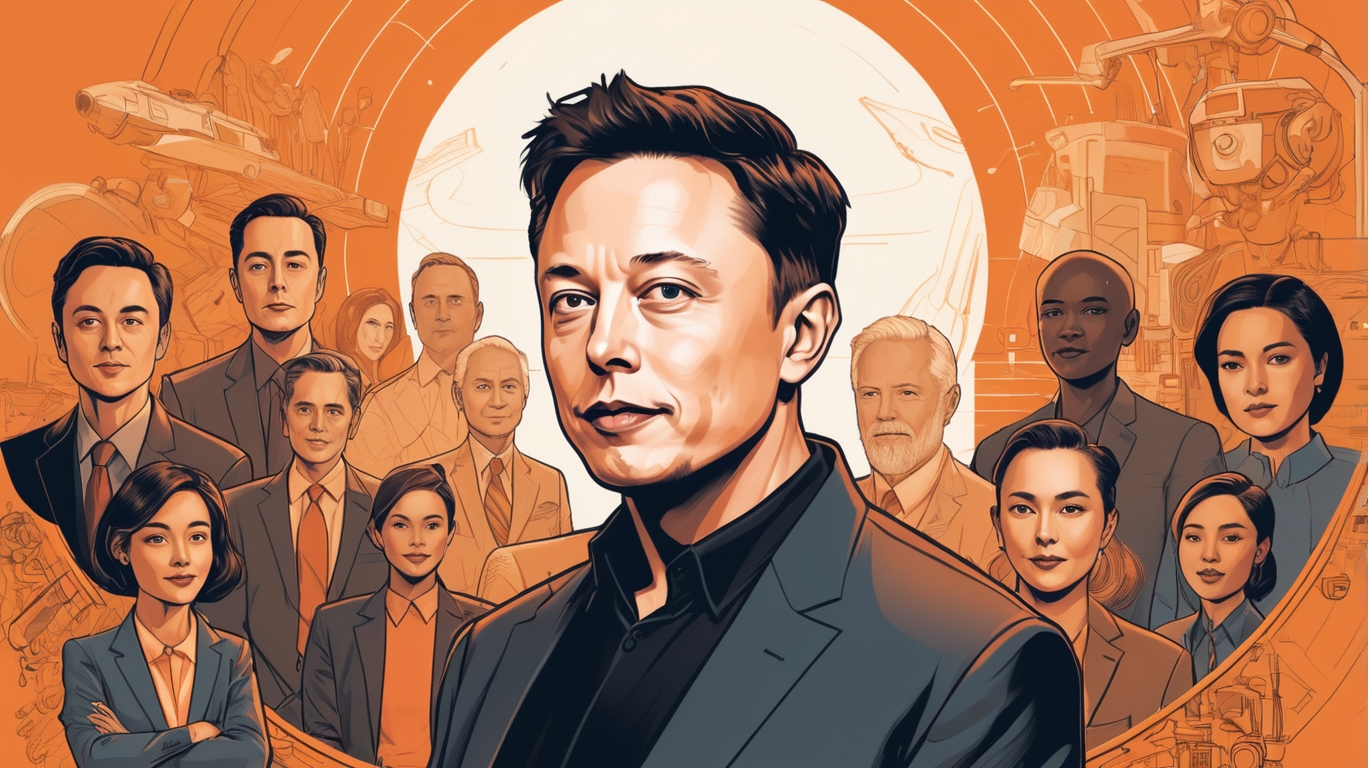
Billionaire entrepreneur Elon Musk's lawsuit against OpenAI is set to go to trial in spring 2026, as determined by a federal judge. This legal battle centers around Musk's claims that OpenAI has deviated from its original mission of developing artificial intelligence for the benefit of humanity, transitioning instead to a for-profit model.
Key takeaways
- The jury trial is scheduled for spring 2026.
- Musk co-founded OpenAI in 2015 but left the organization before its significant growth.
- The lawsuit challenges OpenAI's shift to a for-profit model, which Musk argues undermines its founding principles.
- OpenAI is currently seeking substantial funding to support its operations and growth.
Background of the lawsuit
Elon Musk co-founded OpenAI in 2015 alongside Sam Altman, with the vision of creating artificial intelligence that would benefit humanity. However, Musk departed from the organization before it gained traction and subsequently launched his own AI venture, xAI, in 2023. In 2024, Musk filed a lawsuit against OpenAI, alleging that the company had strayed from its foundational mission by prioritizing profit over public good.
The court's decision
On April 4, 2025, Judge Yvonne Gonzalez Rogers of the U.S. District Court for the Northern District of California ruled that the trial would proceed as scheduled in spring 2026. The judge denied Musk's request to halt OpenAI's transition to a for-profit model, instead opting for a fast-tracked trial to address the pressing issues at hand.
Implications of the trial
The outcome of this trial could have significant implications for the future of OpenAI and the broader AI industry. Key points include:
- For-profit transition: OpenAI argues that shifting to a for-profit model is essential for raising the capital needed to compete in the rapidly evolving AI landscape. The company is currently in discussions to secure up to $40 billion in funding, led by SoftBank Group.
- Musk's competitive stance: Musk has accused OpenAI of prioritizing corporate interests over its original mission, while OpenAI has countered that Musk's actions are motivated by a desire to hinder a competitor.
- Funding and valuation: OpenAI's recent funding rounds, including a $6.6 billion raise and a potential $40 billion round, are contingent on the company's restructuring to eliminate nonprofit control. This financial pressure adds urgency to the trial's timeline.
Future developments
As the trial approaches, both parties are expected to prepare extensively for what could be a landmark case in the tech industry. The legal proceedings will not only address Musk's allegations but also set a precedent for how AI companies navigate the balance between profit and ethical responsibility.
In conclusion, the upcoming jury trial between Elon Musk and OpenAI is poised to be a pivotal moment in the ongoing discourse surrounding artificial intelligence, corporate ethics, and the future of technology. With significant financial stakes and foundational principles at play, the outcome will likely resonate throughout the industry for years to come.
Sources
- Tech in Asia - Connecting Asia's startup ecosystem, Tech in Asia.
- Elon Musk vs Sam Altman: OpenAI jury trial to start in spring 2026, Jang.
- Musk and OpenAI jury trial to begin in spring next year, Reuters.
- OpenAI and Musk agree to fast tracked trial over for-profit shift, The Business Standard.
- Musk and OpenAI jury trial to begin in spring next year, MarketScreener.