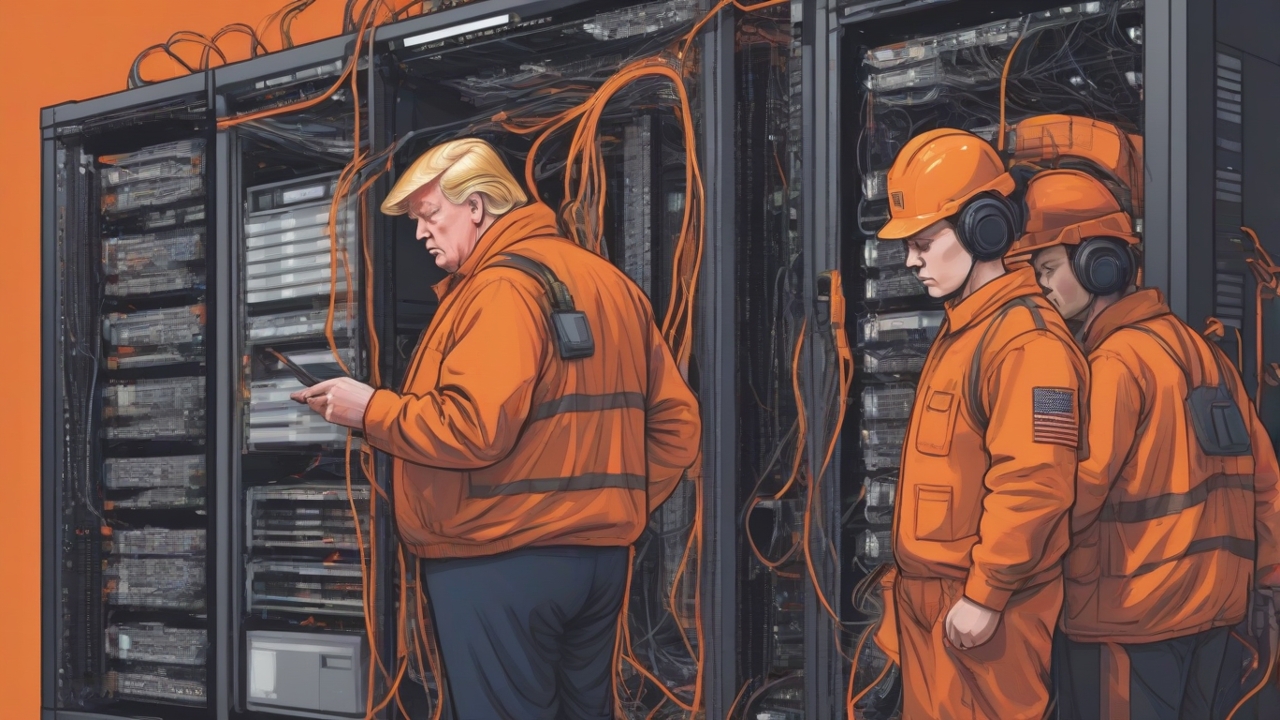
Introduction to Trump Tariffs Impact on Big Tech’s US Data Center Spending
Recent developments in U.S. trade policy, particularly the imposition of sweeping tariffs by President Donald Trump, are poised to significantly affect Big Tech’s plans for data center expansion in the United States. These tariffs target major technology equipment suppliers from countries like China, Taiwan, and South Korea, which are crucial for the construction and operation of data centers.
Latest Developments
- Tariff Details: Trump has implemented tariffs of up to 34% on Chinese goods, 32% on Taiwanese imports, and 25% on South Korean imports, with a baseline tariff of 10% on all U.S. imports. These tariffs are part of a broader trade strategy aimed at countering perceived trade barriers abroad.
- Immediate Impact: The tariffs have sent shockwaves through financial markets, causing tech stocks to plummet. Companies like Microsoft, Amazon, and Alphabet have seen significant declines in their share prices, reflecting investor concerns over increased operational costs and reduced spending on AI infrastructure.
Key Statistics
- Import Values: Electronics, including data center equipment, were the second-largest import category in the U.S. last year, worth nearly $486 billion. Data processing machine imports alone were valued at about $200 billion in 2024, primarily sourced from Mexico, Taiwan, China, and Vietnam.
- Market Impact: The tech-heavy Nasdaq market experienced a significant decline of 4% following the tariff announcements, while the Dow Jones fell by 2.5%.
Expert Opinions
- Abhishek Singh of the Everest Group notes that tech giants will likely reallocate their spending to mitigate the impact of tariffs, focusing on procurement hedging and sourcing shifts.
- Gil Luria from D.A. Davidson emphasizes that the cost of data center equipment will rise significantly, prompting companies like Microsoft and Amazon to adopt a more cautious approach to their data center build-out.
- Emily Benson suggests that predicting the exact impact is challenging due to the complexity of supply chains, but smaller data center operators are likely to face greater challenges than hyperscalers like Google or Amazon.
- Niccolò Lombatti of BMI highlights the potential for capex inefficiencies in data center construction due to tariff-induced supply chain disruptions.
Market Impact
The tariffs are expected to delay data center expansions and AI adoption, affecting ambitious projects like Stargate—a $500 billion data center venture aimed at advancing AI development in the U.S. Major cloud providers such as Microsoft, Alphabet, and Amazon are facing increased skepticism from investors over their AI investments.
Future Implications
- Cost Increases: Higher tariff rates will increase the cost of importing necessary equipment, potentially leading to higher prices for consumers and reduced demand for data center services.
- Supply Chain Disruptions: Companies may need to diversify their supply chains or stockpile components to mitigate the effects of tariffs, which could lead to inefficiencies in capital expenditures.
- Economic Uncertainty: The lack of a clear end date for these tariffs creates uncertainty for AI and data center companies, making investment decisions more challenging.
- Global Trade Dynamics: The potential for retaliatory tariffs could escalate into a broader trade war, further complicating the global supply chain and impacting tech industry growth.
Overall, Trump’s tariffs pose significant challenges for Big Tech’s plans to expand AI infrastructure, potentially delaying major projects and increasing operational costs across the industry.